When you run your own corporate event you set the dates, the venue and the schedule. When you exhibit at someone else’s trade fair you set none of them. The organiser fixes the dates, the exhibition centre dictates when vehicles may access the site, and in the hours your team enters or leaves the hall several hundred other exhibitors are doing the same on the same roads.
Planning trade fair transfers in Florence from abroad adds a second layer: you are booking a supplier you have never met, in a city whose access rules you cannot see from your desk, in weeks when every vehicle in the region is already committed. This guide — for marketing and export managers, trade-show coordinators and exhibition agencies — covers how your team reaches Florence, how materials travel with them, what restricted-access zones mean in practice, and how far ahead to book from abroad.
The most constrained trip you will make, and therefore the most plannable
A trade fair inverts the usual problem. In a corporate programme the enemy is uncertainty — scattered arrivals, moving numbers, changing agendas — and our guide to corporate event transportation in Tuscany covers that case. At a fair you know almost everything months ahead: published dates, access windows set out in the organiser’s exhibitor regulations [TO VERIFY: build-up and breakdown access windows for the specific edition], the same opening hours for everyone. But so does every other exhibitor, which makes your peak their peak. Booking early does not avoid the congestion: it decides which hour you sit in it.
How teams from abroad actually reach Florence
Florence has its own airport, Amerigo Vespucci (FLR), close to the city but served by a limited short-haul network. Pisa Galileo Galilei (PSA), about an hour west by road, carries a wider range of European routes and is often the practical answer for a team flying from the UK, Germany or Scandinavia.
Long-haul is a different question. Intercontinental flights into Tuscany are rare, so teams from North America or Asia connect through Rome Fiumicino (FCO) or Milan Malpensa (MXP), or through a European hub into Pisa. The final leg is then a road or rail decision worth taking before tickets are issued: a group landing at Fiumicino after a long-haul sector, with stand materials in the hold, cannot improvise a connection.
Two points belong in the arrival plan. Group the arrivals rather than chasing them: one waiting window per airport, flights inside it consolidated, separate vehicles for the rest. And build a real buffer into build-up day, because the access window will not wait. If your team lands at Pisa, see Pisa airport transfers for MICE groups.
Three phases, three different transport problems
Most exhibitors brief a supplier in one line: “eight people, the 14th to the 17th”. That hides three operations with different passengers, loads and constraints.
| Phase | Who moves | What travels with them | Dominant constraint | What it requires |
| Build-up | Small technical and supervising team | Stand parts, samples, equipment | Vehicle access window, often before dawn or late evening | Real load space, a driver outside standard hours, an agreed set-down point |
| Show days | The full exhibiting team, plus guests | Hand luggage, replacement materials | Repetition, with peaks shared by the whole fair | A scheduled shuttle on one fixed route, plus a vehicle for off-programme movements |
| Breakdown | Technical team, often reduced | Everything going home, opened packaging included | Simultaneity with every other exhibitor | Staggered departures, more load space than on the way in, an agreed waiting margin |
Breakdown is the worst moment of the trip and the one most often left to chance. It cannot be brought forward — nothing comes down before the fair closes — so the only lever is sequencing: plan departures backwards from each person’s flight, give everyone an individual pickup time, and assign the dismantled materials to a named vehicle before the last day.
Materials travel with your people, and the boot is smaller than it says
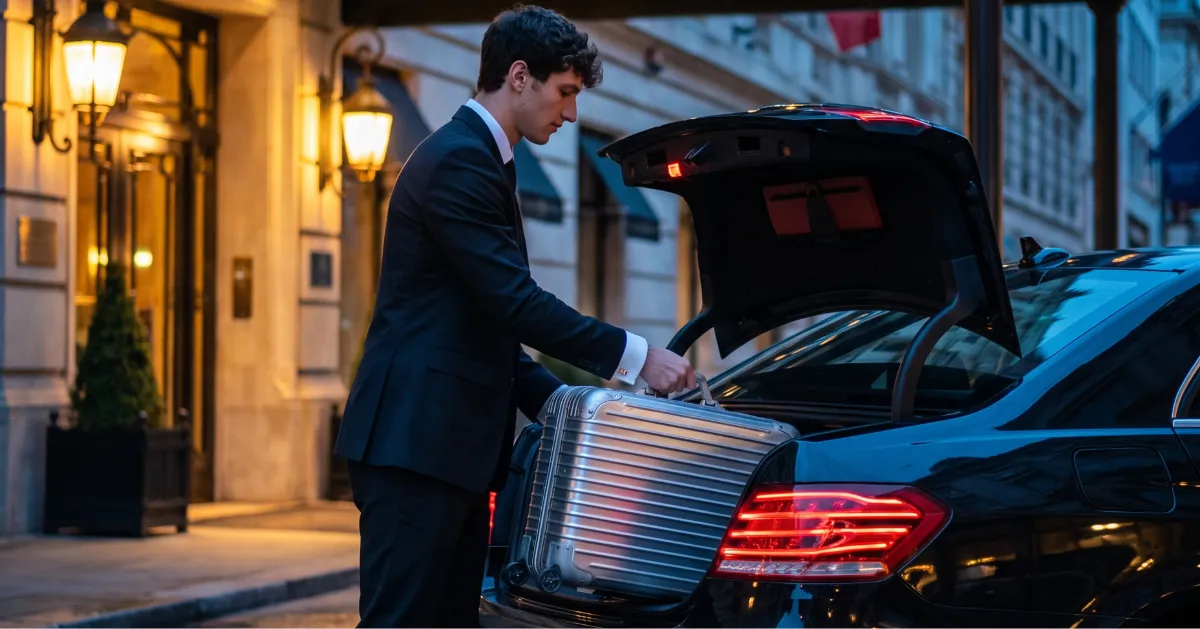
Stated luggage capacity assumes an empty compartment, regular suitcases and unhurried loading — an exhibition trip meets none of those conditions. Roll-ups, sample cases, totems and monitors do not stack, and a seven-seat minivan carrying seven passengers has almost no space left for a stand.
Tell the supplier three things at the request stage, not on the day:
- How many pieces, and the dimensions of the largest. “A few boxes” is not a brief.
- What is fragile or cannot be stacked. A monitor occupies space nothing else fills.
- Whether people and materials must travel together. Splitting them — one vehicle for the team, one for the load — often costs less than oversizing one vehicle.
Flag anything oversized or delicate early: see transporting special luggage and event equipment.
ZTL: the rule that decides your hotel and your dinners
Almost every Italian historic centre, Florence included, is protected by a zona a traffico limitato (ZTL): a restricted traffic zone with camera-enforced gates, active at set hours. Boundaries and permit rules differ city by city [TO VERIFY: current ZTL boundary and hours for the specific address], and unauthorised entry generates fines that arrive by post months later, often to whoever made the booking.
Two consequences belong in your plan rather than in your evening. An address inside the zone does not guarantee door-to-door access: expect an authorised set-down point nearby and a short walk, which matters with sample cases in hand. And since evening commitments during a fair sit in the centre, an itinerary with several stops is built around permitted stopping points, not addresses — which a licensed local operator supplies along with the authorisations.
Clients at your stand, and drivers who can talk to them
The transfer that carries your team and the one that carries a client are different services, even on the same route on the same day. Your team will share a vehicle with boxes and tolerate a ten-minute wait; a customer, prospect or journalist you invited to the stand will not, and that journey is part of your commercial proposition.
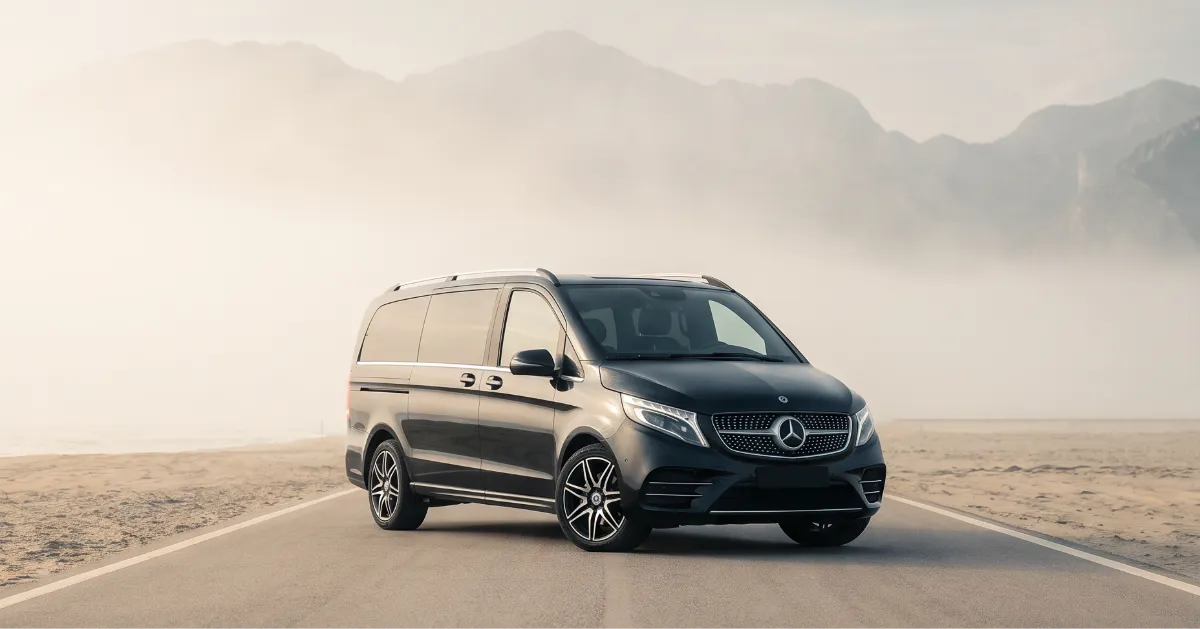
So keep guest capacity outside the shuttle rotation — an executive sedan or a lounge minivan — and confirm the driver’s working language: the driver is part of the conversation whether you planned it or not. What a structured operator provides here is covered in chauffeur services for corporate events in Tuscany.
Booking from abroad: lead time, contracts and payment
In fair weeks the binding constraint is not price, it is whether a vehicle exists at all. Florence concentrates major exhibitions into specific windows of the year — Pitti Uomo is the best known internationally — and demand then arrives from every exhibitor at once. Request an availability hold as soon as dates and hotel are confirmed: it comes before the contract, not after.
In Italy the service comes from a licensed private-hire operator — an NCC, or noleggio con conducente — a regulated category distinct from taxis and coach companies. Contracting one from abroad, settle four points early: invoicing currency and who carries exchange risk; Italian VAT treatment for your entity, which depends on where the buyer is established [TO VERIFY: VAT treatment for non-Italian corporate clients]; payment method and deposit schedule, since bank transfer is standard and peak dates usually require a deposit well ahead; and one named contact on each side, with a mobile number that works during the fair.
Frequently asked questions
Which airport should an exhibiting team fly into for a Florence fair?
Florence Amerigo Vespucci (FLR) is closest to the city but has a narrower route network. Pisa Galileo Galilei (PSA), roughly an hour west by road, carries more European connections and is often the better option for a team travelling with materials. Long-haul passengers usually connect through Rome Fiumicino or Milan Malpensa, both several hours away, with rail as an alternative. Decide the final leg before flights are ticketed: changing it later is expensive and, on build-up day, risky.
How far in advance should we book transport for a trade fair in Florence?
As soon as the fair dates and your hotel are confirmed, even with provisional numbers. During exhibition weeks availability runs out well before price becomes the issue, because every exhibitor is booking the same days. Ask for a hold covering the three phases — build-up, show days, breakdown — and refine numbers later. Waiting for a final team list is why overseas exhibitors end up with whatever is left.
Can stand materials and samples travel in the same vehicle as our team?
Yes, provided you declare them at the request stage rather than on arrival. Quoted boot capacity assumes regular luggage in an empty compartment; roll-ups, totems, monitors and sample cases take far more room than the piece count suggests. Give the supplier the count, the largest dimensions and anything fragile. The efficient answer is often two vehicles, one for people and one for the load.
Will restricted traffic zones affect our schedule in Florence?
They will shape it, which is manageable when someone handles it. A ZTL covers the historic centre, is camera-enforced during set hours, and varies by city in boundary and rules. A licensed local operator manages the authorisations and knows the permitted set-down points. The practical impact is walking distance: a central address usually means stopping nearby and walking a short stretch, which belongs in your timings rather than in your evening.
Where to start
Set out the three phases on one page, with indicative times and the people involved. Measure the load, at least the largest pieces. Separate team movements from guest movements. Then request availability, before you request a quotation: a brief built that way gets an operational plan rather than a rate sheet, and can be compared between suppliers.
Tradycom operates from Cascina, minutes from Pisa airport, with multilingual drivers and vehicles suited to teams travelling with equipment. To review the transport plan for your next exhibition in Florence, write to info@tradycom.com or call +39 050.8667849.